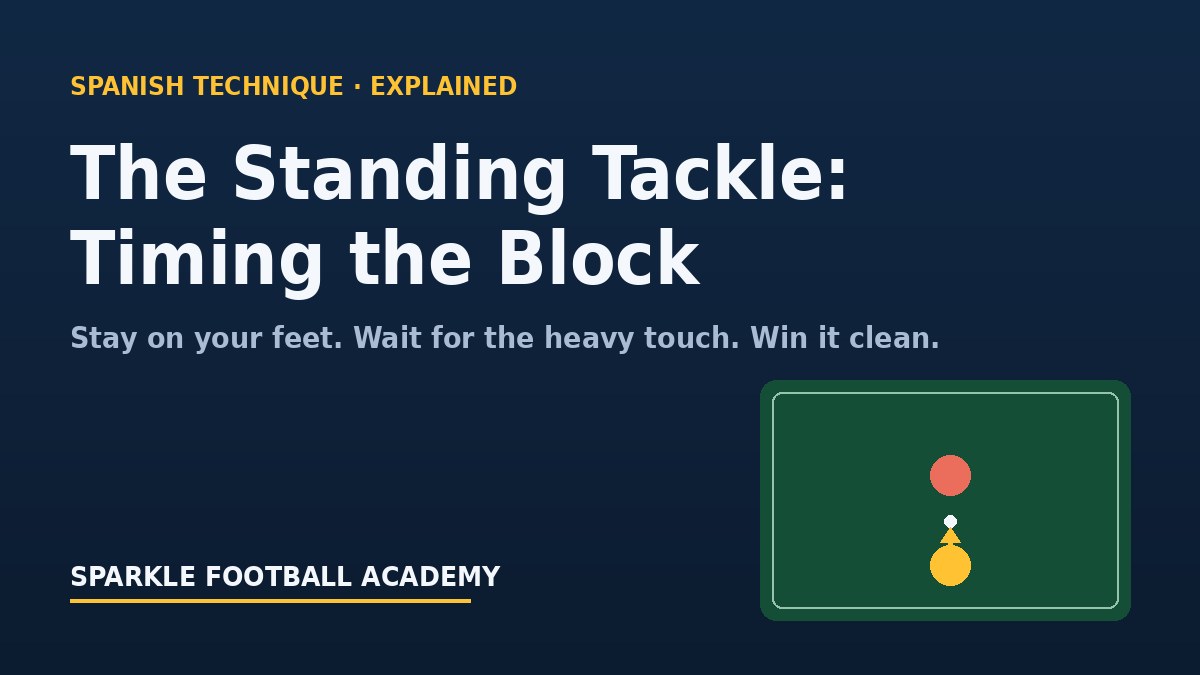
Standing tackle in soccer, explained simply: it’s the tackle where the defender stays on his feet, waits for the attacker’s touch to go a little long, and blocks the ball with the inside of the foot while his body stays balanced behind it. In Spanish coaching it’s the entrada de pie, and at Sparkle Football Academy it is the first tackle we teach every young defender, before anyone is allowed to slide.
Most kids think tackling means diving in. Watch a U10 game and you’ll see it: a defender sprints at the ball, throws a leg, and the attacker skips past into the space he just left. The standing tackle fixes that. It turns defending from a gamble into a skill you can time, repeat, and get better at.
What a Standing Tackle Actually Is
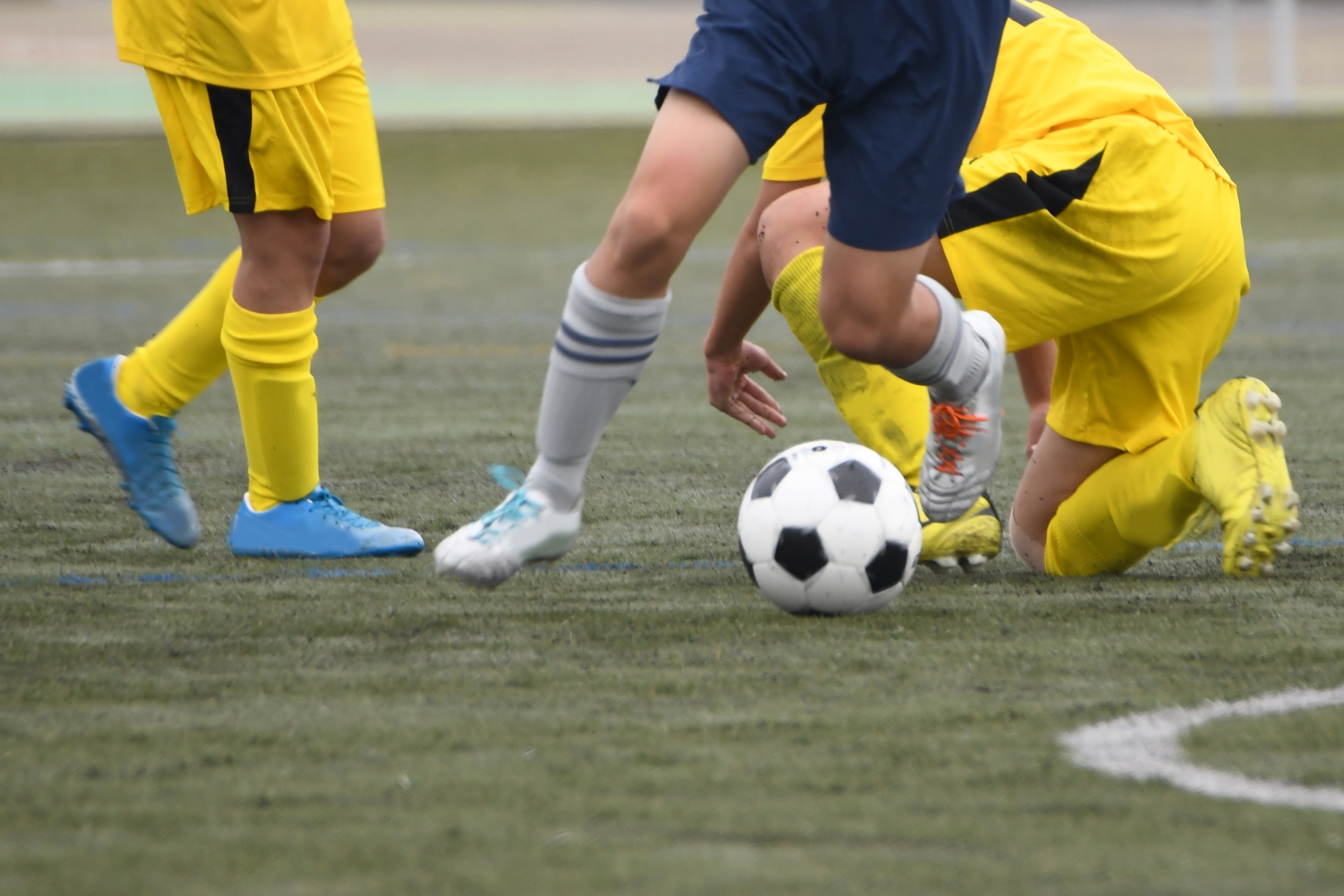
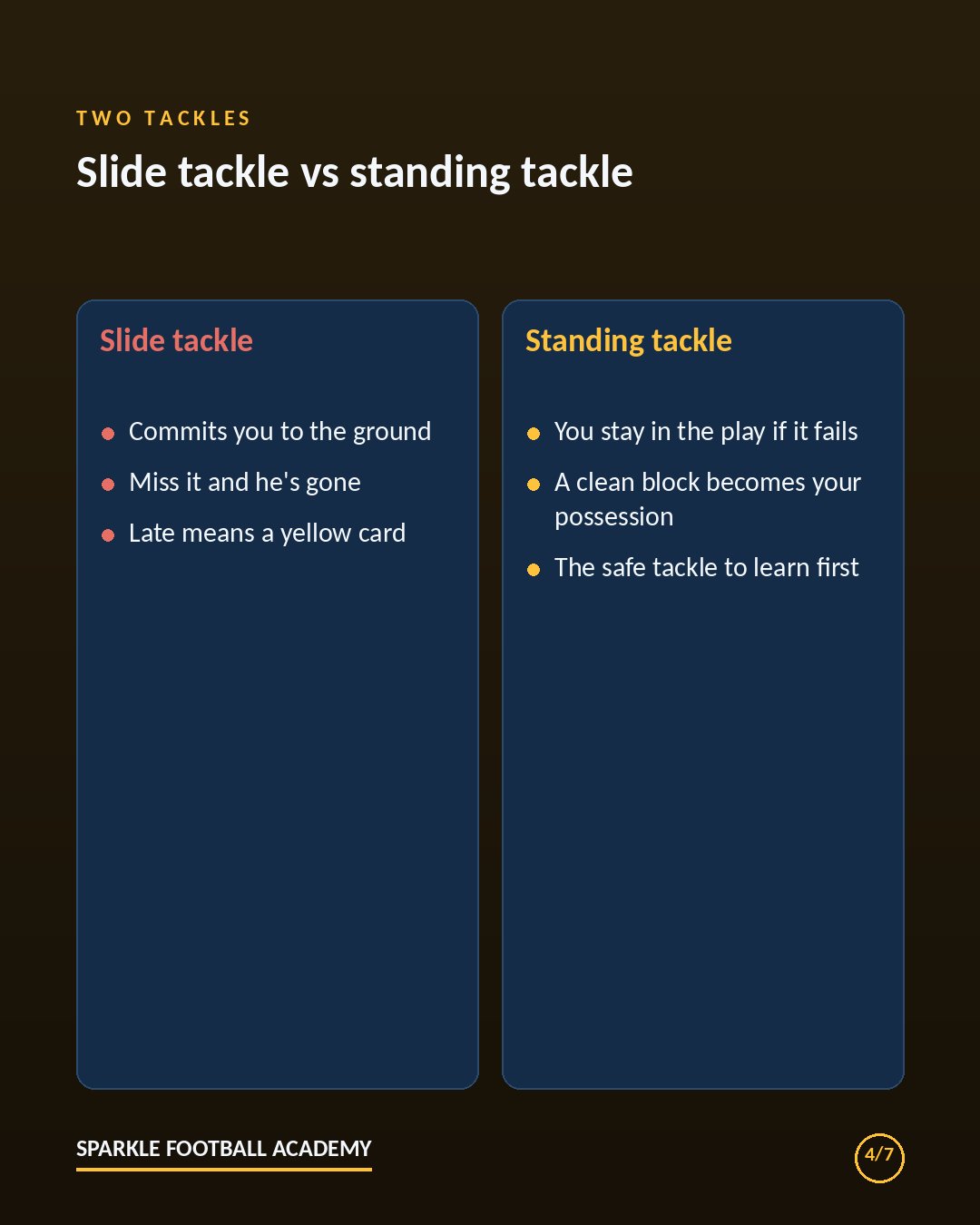
A standing tackle is a block, not a swipe. The defender closes the distance, gets low and side-on, and when the attacker pushes the ball a step too far, he steps in and puts the inside of his foot firmly through the middle of the ball. Because his weight is behind the ball, the ball stops or stays with him. Because he never left his feet, if the timing is off he can recover and keep defending.
Compare that with a slide tackle. A slide commits you to the ground. Win it and it looks great. Miss it and the attacker is gone, you’re lying on the grass, and if you were late there’s a yellow card. That’s why we treat the slide as a last resort and the standing tackle as the default.
Why We Teach the Standing Tackle First
Three reasons, and the first one is for parents.
- Safety. In a standing tackle the defender’s body is behind the ball, not flying at the opponent. Contact is foot to ball, and both players stay upright.
- Recovery. If the tackle fails, the defender is still standing, still goal-side, and can jockey or chase. A failed slide takes a player out of the play for two or three seconds.
- Possession. A clean block often leaves the ball at the defender’s feet, which means the tackle becomes the start of an attack rather than a clearance into nowhere.
It also teaches the most important defensive habit there is: patience. You can’t standing-tackle a player who hasn’t taken a touch yet. You have to wait for the moment.
The Four Cues: Feet, Hips, Foot, Follow-Through
We say these four words at every defending session until the players say them back to us.
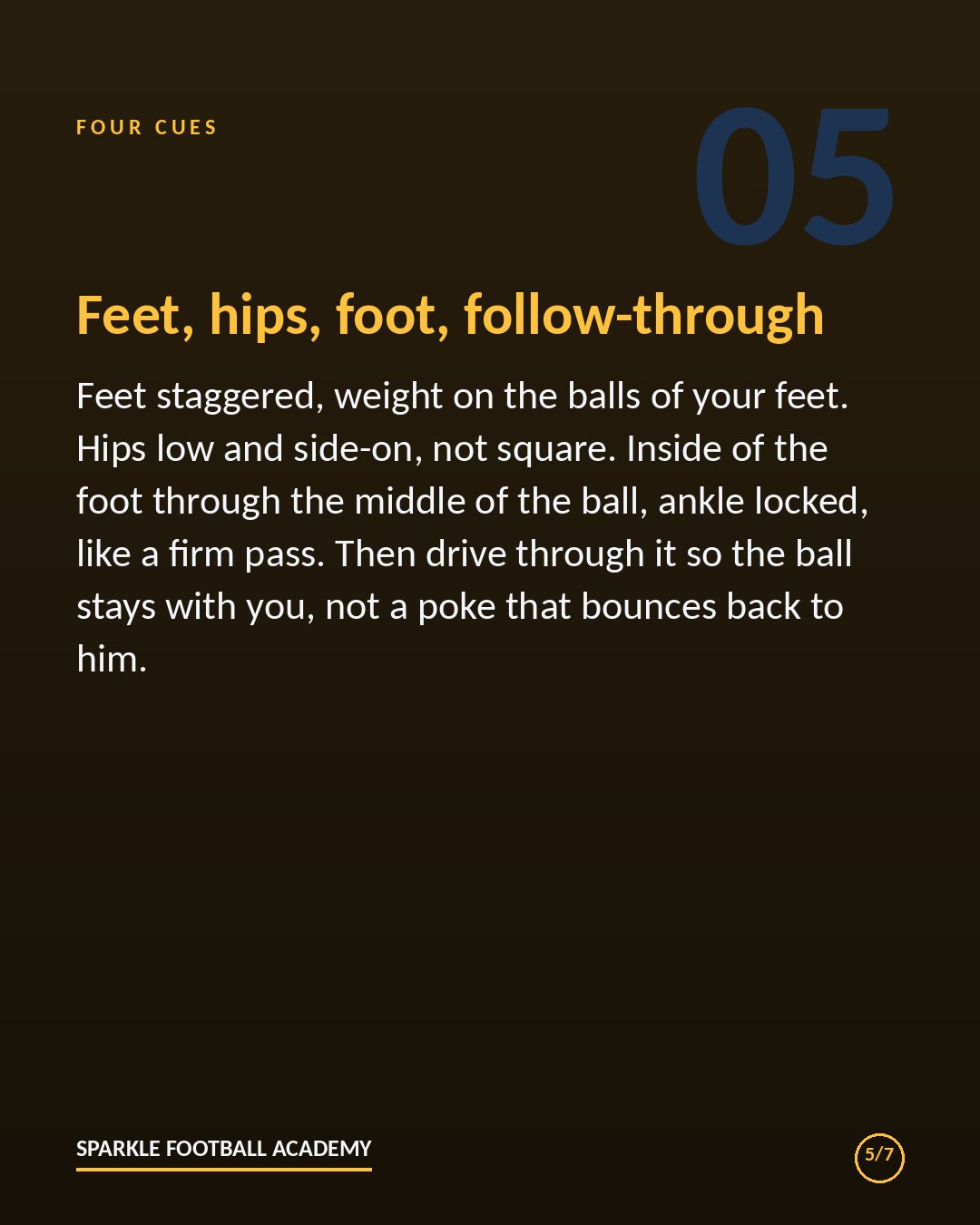
Feet
Staggered, one foot slightly ahead of the other, weight on the balls of the feet. Flat feet can’t move; a defender standing square with his heels down is already beaten.
Hips
Low and side-on, never square to the attacker. A side-on stance lets you shuffle backward, turn and run, or step in to block. Square hips only let you go one way, and the attacker knows it.
Foot
The inside of the foot goes through the middle of the ball, ankle locked, like a firm pass. Think of it as passing the ball into the attacker’s foot and winning the collision. A toe-poke has no surface behind it and bounces straight back to him.
Follow-Through
Drive through the ball. The tackle isn’t finished at contact; the defender pushes through so the ball ends up on his side. Players who stop at contact win the ball for a split second and then lose it again.
Timing Is the Whole Skill
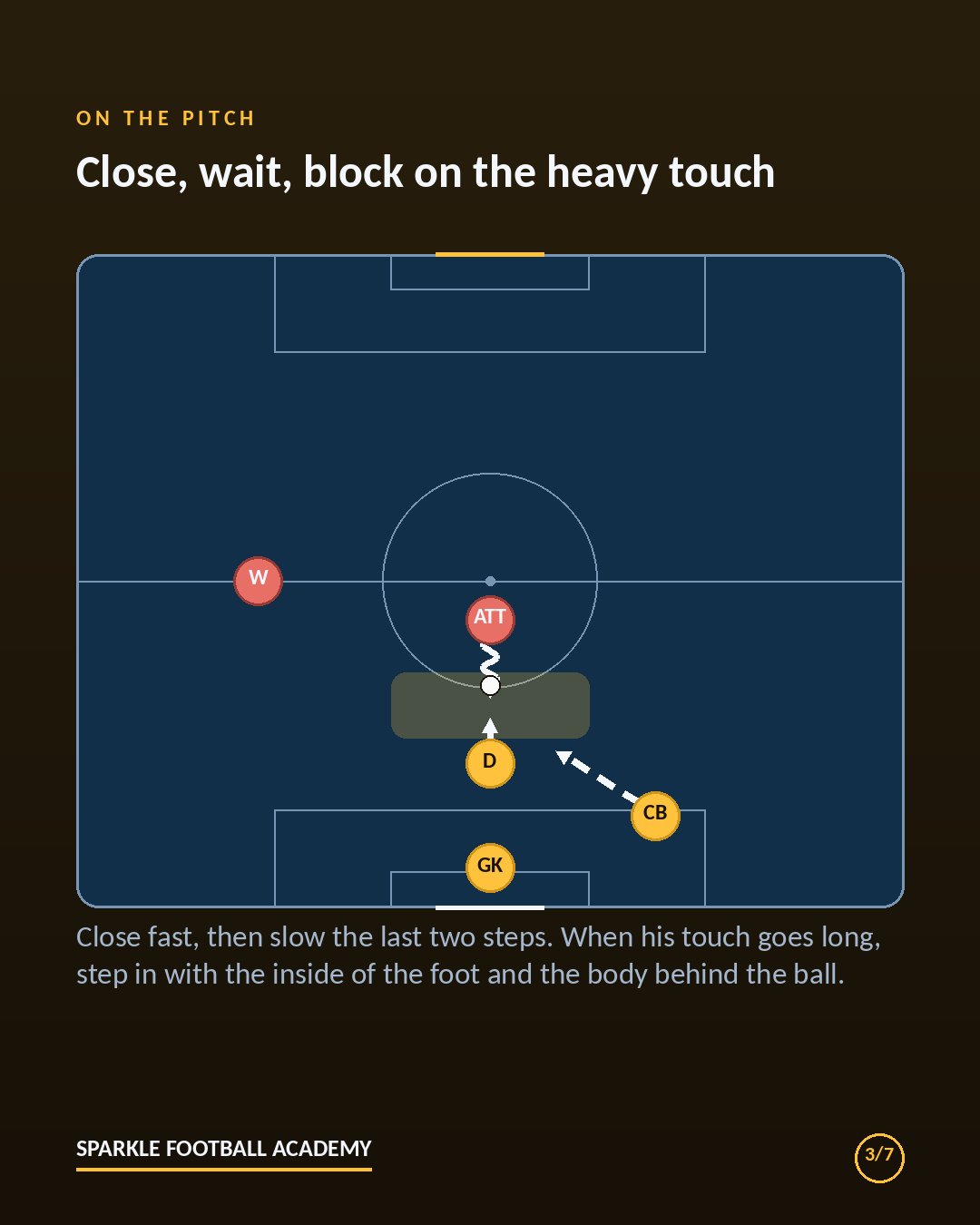
Everything above is body shape. The thing that separates good defenders from brave ones is timing. The standing tackle goes in on the heavy touch, the moment the ball is a step away from the attacker’s foot. Go early and he’s still in control, so he cuts around you. Go late and the ball is already past you.
Here’s how we teach the read:
- Close fast, then slow down. Sprint to close the gap while the attacker is looking down at the ball, then shorten your steps for the last two yards so you can react.
- Watch the ball, not his feet. Feet fake. The ball can’t. Your eyes stay on the ball.
- Show him one way. Angle your body so his only option is toward the touchline or toward your covering teammate. Now you know which way the heavy touch will go.
- Go on the touch. The instant the ball leaves his foot and travels further than he wanted, step in. That’s your window.
If you’ve read our piece on 1v1 dribbling, you’ll recognize this from the other side. Attackers try to make defenders commit early. Defenders win by refusing to.
Standing Tackle vs Slide Tackle vs Jockeying
Young players sometimes hear “don’t dive in” and think it means never tackle. It doesn’t. There are three tools, and each has a moment.
- Jockeying (in Spanish, temporizar) is delaying: staying between the attacker and the goal, showing him one way, buying time for teammates. It’s what you do before the tackle.
- Standing tackle is the block: you’re close, the touch goes heavy, you step in and win it on your feet. It’s the tackle you use nine times out of ten.
- Slide tackle is the emergency: the attacker is past you, the ball is loose, and nothing else will reach it. Ball first, always, and never from behind.
Good defenders chain these together: delay, steer, block. That’s the language we use at the academy, and it’s the order we teach them in.
Where It Fits in the Team
A standing tackle almost never happens alone. The defender who steps in needs a teammate covering behind him, so that if the block fails the attacker runs into the next player, not into open grass. This is why we teach tackling and cover together, and why our number 6 spends so much time learning where to stand when a teammate engages the ball.
It also connects to pressing. When a team steps up in a mid-block and forces a heavy touch, the player who arrives has to win the ball cleanly, not foul. A team that can standing-tackle can press. A team that can only slide gives away free kicks.
How We Train It at Sparkle
We don’t teach the standing tackle in lines with cones. We put it in games so the timing is real.
- The no-slide channel. A 10-by-15-yard lane, one attacker dribbling to an end line, one defender who is not allowed to leave his feet. The attacker scores one point for reaching the line. The defender scores two for a clean block that stays in his possession. The scoring tells the defender what we value.
- Delay, steer, block. Same channel, but the defender must first slow the attacker, then show him to one side, then tackle. Coaches call out which side to show, and the tackle only counts if it comes on that side.
- 2v2 with cover. Two defenders, two attackers. The rule: only the defender nearest the ball may tackle; the other must be behind him at an angle. Now the block has a safety net, and players learn the two jobs at once.
- Into the small-sided game. In our 4v4 and 5v5 games, a clean standing tackle that leads to possession earns a bonus point for the whole team. Players start hunting for the heavy touch on their own.
The first sessions are messy. Players either stand off too far or lunge too early. By the third week the good ones start to feel the moment, and you can see it: they stop chasing and start waiting.
For Parents
If your child is a defender, or plays anywhere on the pitch honestly, here’s what to watch for from the sideline.
- Do they stay on their feet? A young player who is always on the ground is a young player who is always beaten. Staying up is progress, even when the tackle isn’t won.
- Do they get low? Bent knees and a side-on stance mean the coaching is landing.
- Do they wait? The best sign of all. A player who closes, slows, and then wins the ball on the attacker’s touch has learned the hardest part.
And a note on safety, because it’s the question we get most: the standing tackle is the safest way to win a ball in soccer. Contact is foot to ball, both players stay upright, and the defender’s body is behind the ball rather than sliding through the opponent’s legs. The Laws of the Game are strict on careless or reckless challenges for good reason, and the standing tackle keeps young players on the right side of them. You can read the referee’s definitions in Law 12 at The IFAB.
Quick Recap
- A standing tackle is a block with the inside of the foot, made on the attacker’s heavy touch, with the body behind the ball.
- Cues: feet staggered, hips low and side-on, inside of the foot through the ball, drive through it.
- Timing is the skill: close fast, slow the last two steps, watch the ball, go on the touch.
- Order of tools: jockey, then standing tackle, and slide only as a last resort.
- Train it in games with scoring that rewards clean blocks and staying on your feet.
Come Learn It With Us
Every Sparkle Football Academy session has a defending block, and the entrada de pie is the first thing we put in it. If you want your child to defend with their head instead of their studs, book a free trial session and come watch the no-slide channel for yourself. Bring a defender who loves sliding. We’ll change their mind in three weeks.