Line-breaking passes, explained simply: a line-breaking pass travels through or over a line of defenders instead of around it. One good one can take three opponents out of the game in a single touch, and it is one of the most valuable habits a young midfielder or defender can build.
In Spain coaches call it a pase que rompe líneas, a pass that breaks lines. This guide covers what it is, why it matters so much in the modern game, how to spot the gap, and the drills we use at Sparkle Football Academy to teach it.
What is a line-breaking pass?
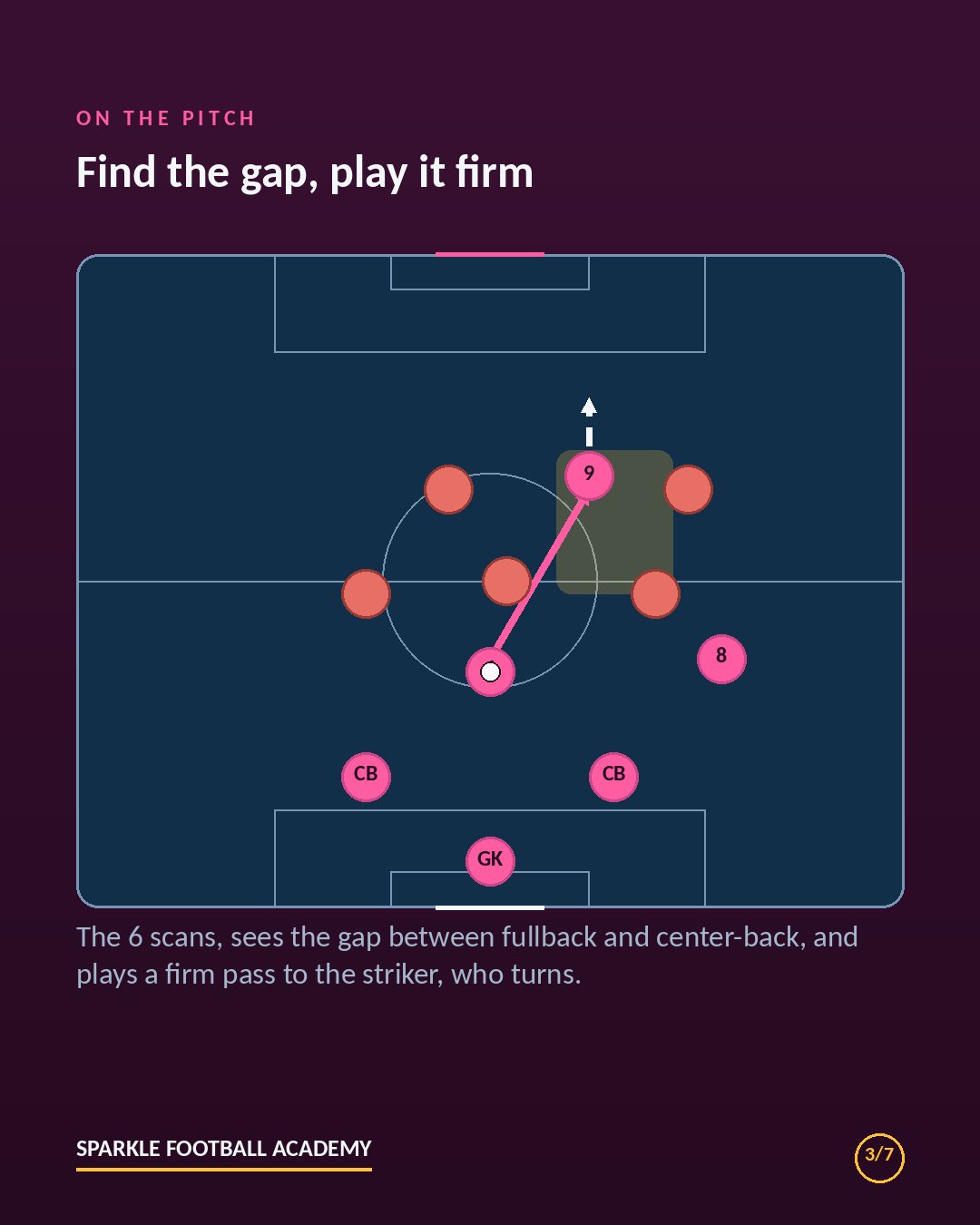
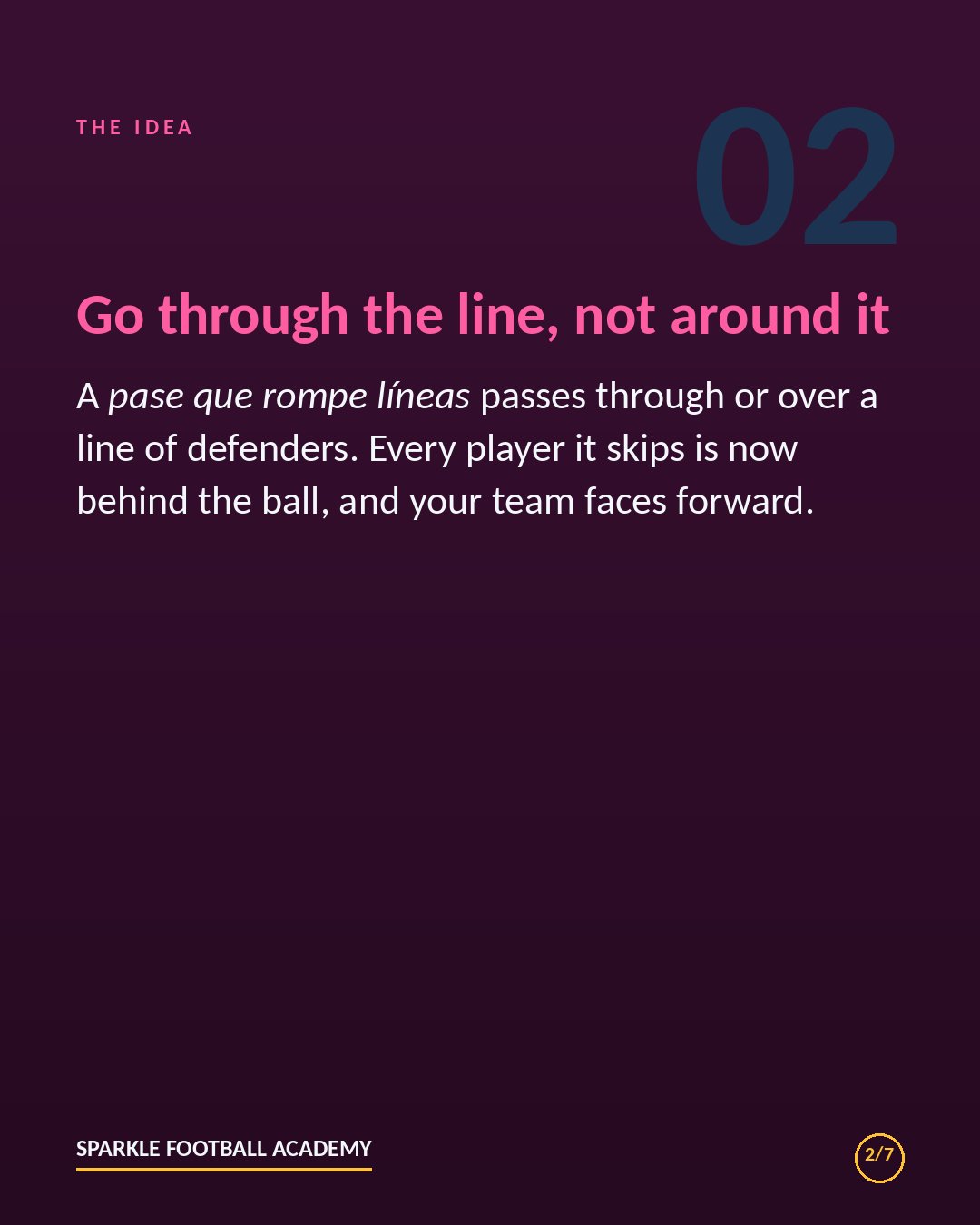
Every defending team organizes itself in lines: usually a front line of forwards, a midfield line and a back line. A line-breaking pass is any forward pass that goes past one of those lines and reaches a teammate on the other side.
Think of it like skipping steps on a staircase. A sideways pass keeps you on the same step. A line-breaking pass jumps you up two or three steps at once, because every defender it travels past is now behind the ball.
Why line-breaking passes matter so much
Sideways and backward passes keep the ball safe, but they ask nothing of the defense. The defenders just shuffle across and stay in shape. A line-breaker does the opposite. It forces defenders to turn around and run back toward their own goal, and that is when gaps open up.
- It takes several defenders out of the play at once.
- It lets your team receive facing forward, toward goal.
- It forces the opponent to defend while running backward, which is the hardest thing to do in soccer.
This is why the best possession teams are not the ones with the most passes. They are the ones whose passes go forward at the right moment. You can read more about that balance in our guide to possession vs counter-attacking soccer.
Where to find the gap
A line-breaking pass needs a lane. The most common gaps are:
- Between a fullback and a center-back.
- Between two central midfielders.
- Between the midfield line and the back line, the space coaches call “between the lines”.
The receiver matters as much as the passer. A teammate standing in the space between the lines is only useful if they can receive and turn. We break this down in more detail in playing between the lines, and the pitch map in 3 zones and 5 lanes shows exactly where those gaps tend to appear.
The three habits behind every good line-breaker
1. Scan before the ball arrives
The pass is decided before the first touch. Players who check their shoulder while the ball is traveling to them already know where the gap is. Players who only look after receiving are too late, because the defense has closed it.
2. Play it firm and early
A slow pass gives defenders time to step across and cut it out. A line-breaking pass should be firm, on the ground and played as soon as the lane opens. Our guide to the driven pass covers the technique.
3. The receiver opens up to turn
The receiver should stand half-turned, with hips open toward the opponent goal, so the first touch can go forward. If they receive with their back fully to goal, the pass has broken the line on paper but the attack stalls.
Line-breaking passes against a high press
When an opponent presses high, line-breaking passes become even more valuable. The pressing players leave space behind them, so one pass through the first line can put your team into a 3v3 or 4v4 with lots of room. We explain how to set that up in beating a high press.
How we train it at Sparkle
Our favorite game is simple. Mark a line across the middle of a small pitch. Points only count when the ball crosses the line to a teammate who can turn and play forward. Players quickly learn to scan first, play firm and stand in the right spots, without a long lecture.
- Start with no defenders in the middle so players get the rhythm.
- Add one or two passive defenders, then make them active.
- Give a bonus point when the receiver turns and plays forward on their first or second touch.
For Parents
If your child plays in midfield or defense, watch for the moment they get the ball. Do they look up and play forward, or do they always pass sideways? Neither is wrong, but the players who learn to recognize the line-breaking moment are the ones coaches trust in big games. Encourage them to take a quick look around before the ball arrives. That one habit changes everything.
Train it with Sparkle Football Academy
Our sessions in Burnaby and Vancouver teach players to scan, find the gap and play the pass that breaks the line. Book a free trial session and see how we coach it.