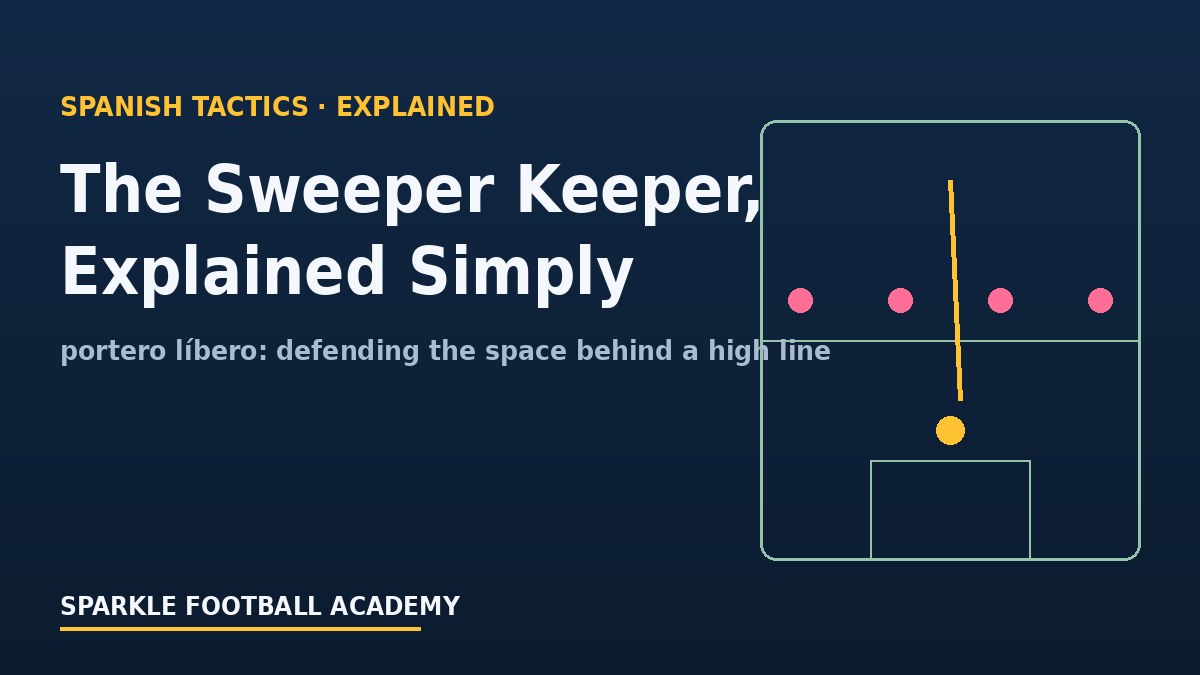
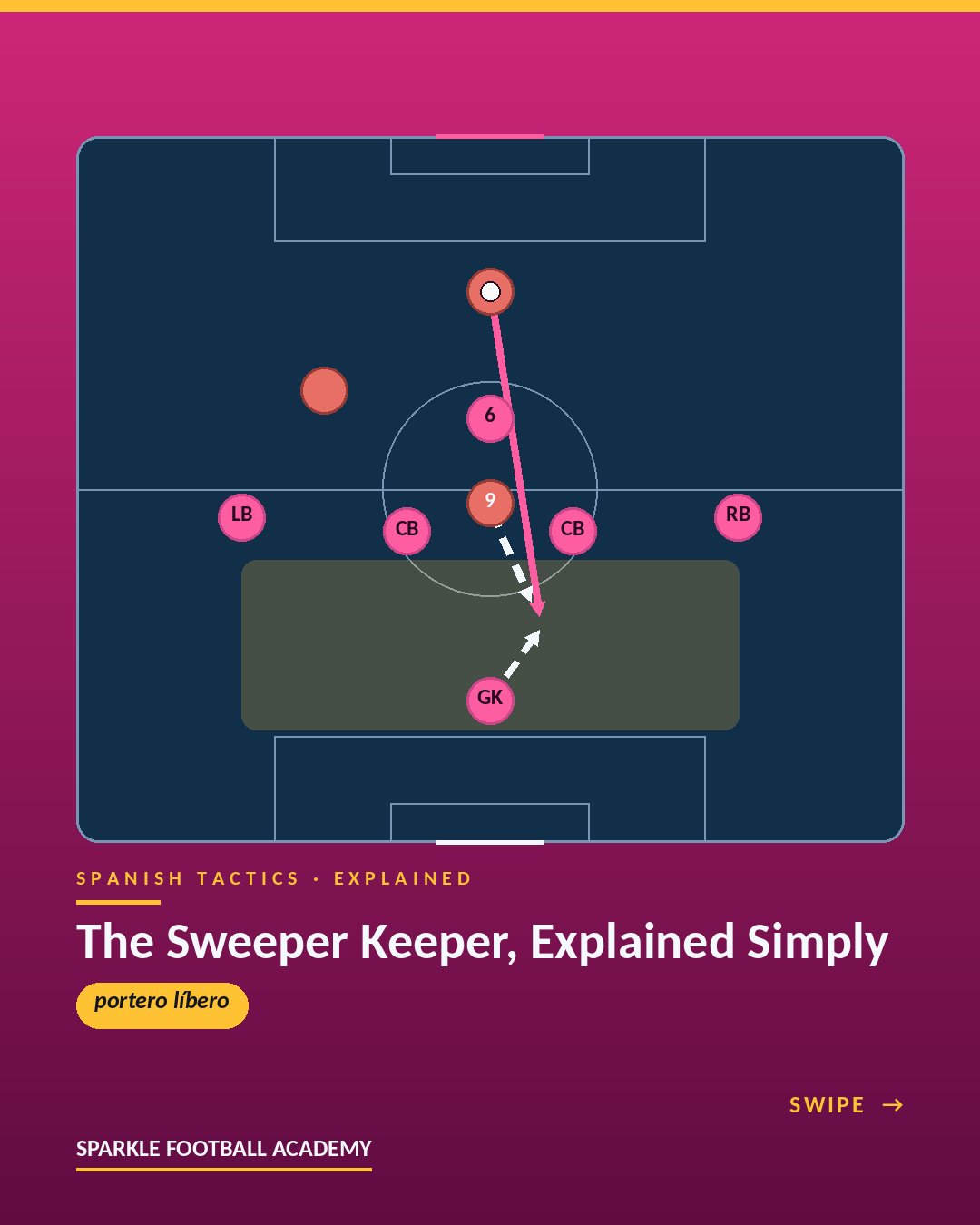
Sweeper keeper explained simply: a sweeper keeper is a goalkeeper who defends the space behind his own defense, not just the goal. When your back line pushes up the field, the biggest empty area on the pitch is the 25 yards between your defenders and your net. A sweeper keeper owns that space. In Spanish coaching we call this player the portero líbero, the “free” keeper who acts like an extra defender.
In this guide we’ll break down what a sweeper keeper actually does, why modern teams can’t play a high line without one, and how we train young goalkeepers at Sparkle Football Academy to start higher, read the game earlier, and win the ball before the striker does.
What Is a Sweeper Keeper?
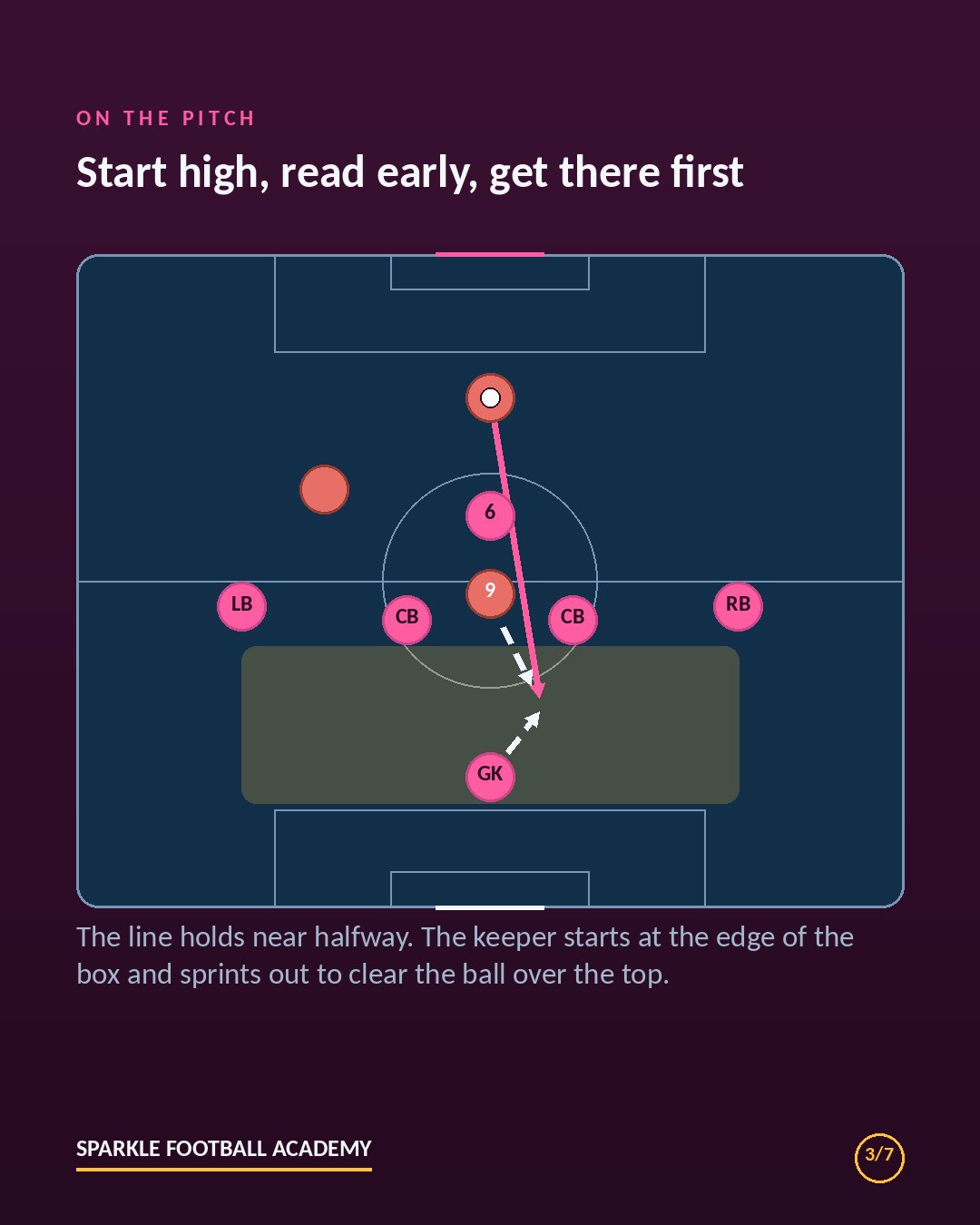
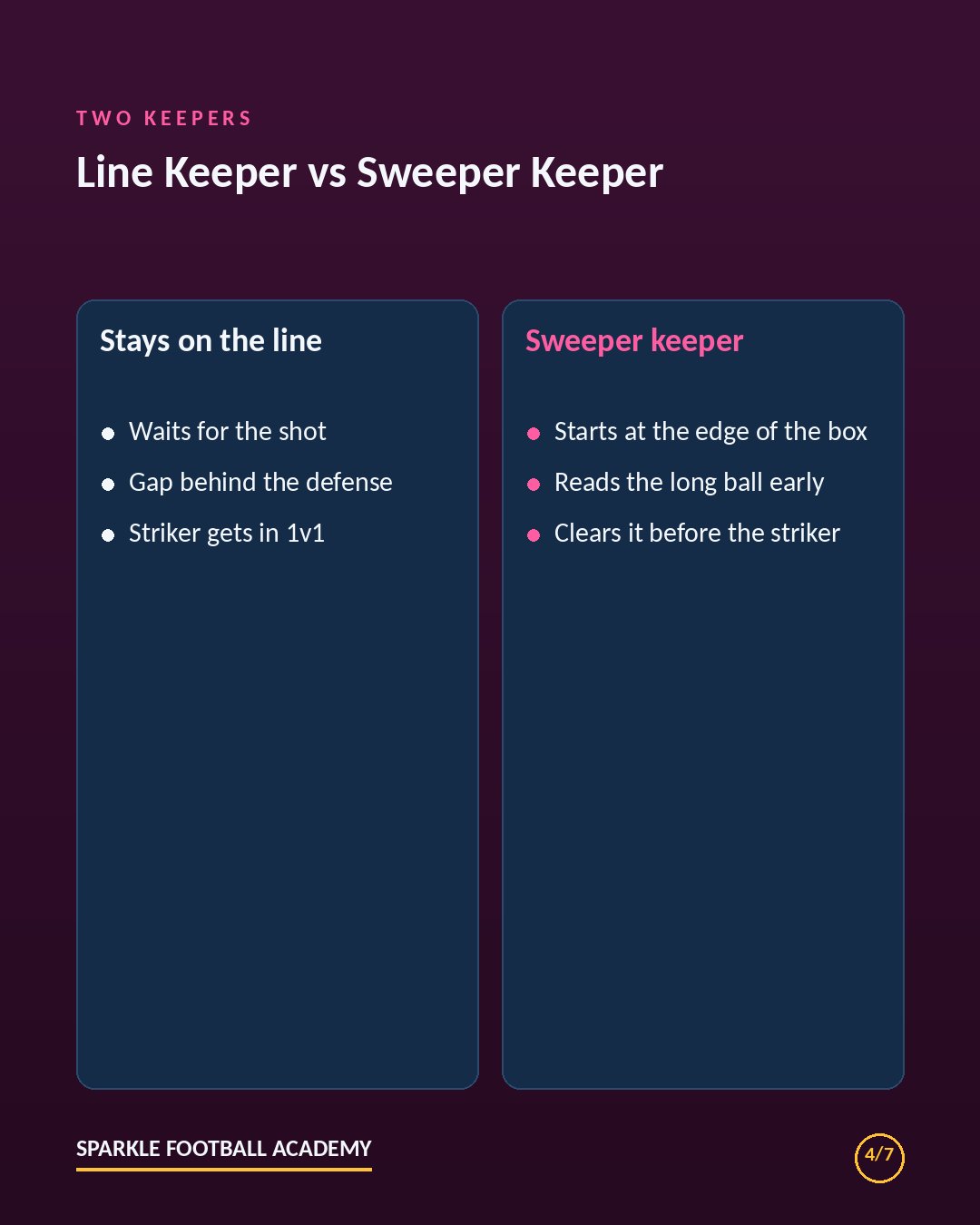
A traditional goalkeeper stands on or near his line and waits for shots. A sweeper keeper plays much higher. When his team has the ball in the opponent’s half, he might be standing at the edge of his penalty area or even outside it. From there he can:
- Clear long balls played over the top of the defense
- Win 1v1 races against strikers who have broken the line
- Offer a safe back-pass option when his team is building up
- Start attacks quickly with a first touch and a pass
The term portero líbero comes from the old líbero or sweeper, the free defender who used to play behind the back line. Modern teams rarely use an outfield sweeper anymore, so that job has moved to the goalkeeper.
Why a High Line Needs a Sweeper Keeper
Teams that press high want their defenders close to midfield. That keeps the team compact and squeezes the space the opponent has to play in. If you want to understand that pressing side, read our guide to the mid-block and the pressing line.
The catch is simple: the higher your defenders stand, the bigger the gap behind them. One accurate ball over the top and a fast striker is through on goal. If your keeper is still standing on his line, he is 18 yards too far back to help. A sweeper keeper closes that gap. He starts high, reads the pass early, and gets there first.
That’s why the two ideas always go together. A high line without a sweeper keeper is a gamble. A high line with one is a weapon.
Starting Position: The Most Important Habit
Being a sweeper keeper is less about bravery and more about starting position. The rule we teach is easy to remember: every time the ball moves up the field, the keeper moves up too.
- Ball in the opponent’s half: start near the edge of your penalty area.
- Ball in midfield: step back toward the top of the six-yard box area, ready to come out or set for a shot.
- Ball near your box: traditional set position, on the angle, ready to save.
If the keeper is in the right spot before the long ball is played, the sprint he needs to make is short. If he starts on his line, even the fastest keeper in the world arrives late.
Reading the Long Ball Early
The best sweeper keepers decide before the ball is in the air. We teach our goalkeepers to watch three cues:
- The passer’s head: when the opponent looks up with time on the ball, a long pass is coming.
- The passer’s hips: open hips and a long back-swing mean the ball is going over the top.
- The striker’s run: if the forward is already sprinting in behind, the keeper must be ready to go.
Once the ball is struck, the keeper has to make a fast, clear decision: come or stay. Half-coming is the worst option, because it leaves the goal empty and doesn’t win the ball.
Clear It, Head It, or Control It
When the sweeper keeper gets there first, he has three choices:
- Clear it: if the striker is close, kick it high and wide toward the touchline. Safety first.
- Head it: outside the box the keeper can’t use his hands, so a header away is often the cleanest option.
- Control it: if there is time, take a touch and pass to a teammate. This turns defense into the start of an attack, the same way good teams build up from the back.
Remember the rules: outside the penalty area the keeper is just another field player and can’t handle the ball. (The positions overview on Wikipedia is a good refresher on how the goalkeeper role has changed.)
How We Train the Sweeper Keeper at Sparkle
We train the portero líbero in game situations, not just in isolated keeper drills. Our favorite setup is an 8v8 game where the defending team must hold a high line near halfway. Every ball played over the top is the keeper’s to win.
- Points for clean sweeps: the keeper earns a point for every long ball he clears or controls before the striker touches it.
- Start-position freeze: the coach shouts “freeze!” and checks where the keeper is standing relative to the ball.
- Footwork first: short sprints, quick turns, and first-touch passing with both feet, because a sweeper keeper is also a passer.
For outfield players, the same sessions teach the back line how to step up together. That ties in with our breakdown of how to beat a high press, the other side of the same coin.
For Parents: Is My Child Ready to Be a Sweeper Keeper?
Young goalkeepers often feel safest on their line. That’s normal. Playing higher takes confidence, and confidence comes from good habits and lots of reps in a supportive environment. A few things to know:
- Mistakes will happen. A keeper who comes out and misses once is learning; a keeper who never comes out isn’t.
- Good footwork matters as much as good hands. Encourage your child to play as a field player sometimes too.
- Small-sided games with a high line are the best classroom. Ask your coach if the team practices this.
At Sparkle, keepers train with the same Spanish-style possession principles as our field players, so they understand the whole game, not just the goal.
Key Takeaways
- A sweeper keeper defends the space behind a high defensive line.
- Starting position beats speed: move up when the ball moves up.
- Read the passer early, then commit: come or stay, never half.
- Clear it, head it, or control it, depending on how close the striker is.
Book a Free Trial at Sparkle Football Academy
Want your young goalkeeper to learn the modern game? Sparkle Football Academy coaches keepers and field players with the same Spanish methodology used by top academies. Book a free trial session and see how we train the portero líbero.