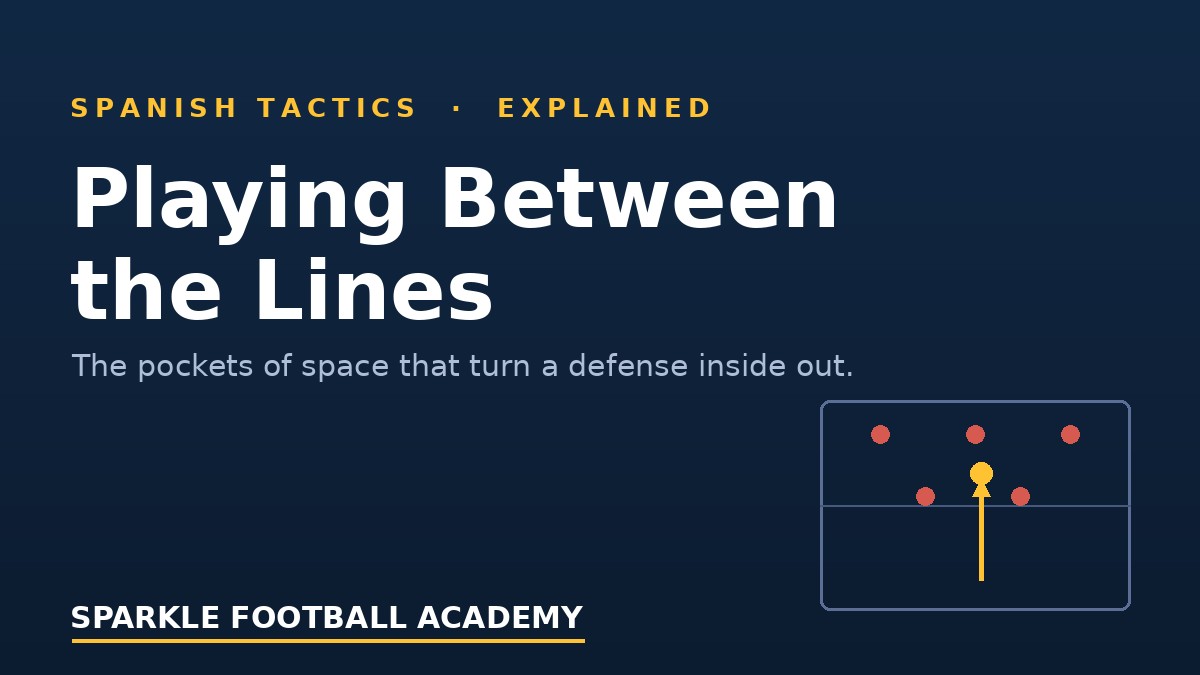
Playing between the lines is one of those phrases you hear on every touchline, but almost nobody stops to explain it. So here is the simple version: playing between the lines means receiving the ball in the pockets of space between the other team’s defenders and their midfielders. Get the ball there, turn, and suddenly you are running at a back line with the whole field in front of you. Spanish coaches call it playing entre líneas — literally “between the lines” — and it is the quiet engine behind almost every possession team you admire.
What “playing between the lines” actually means
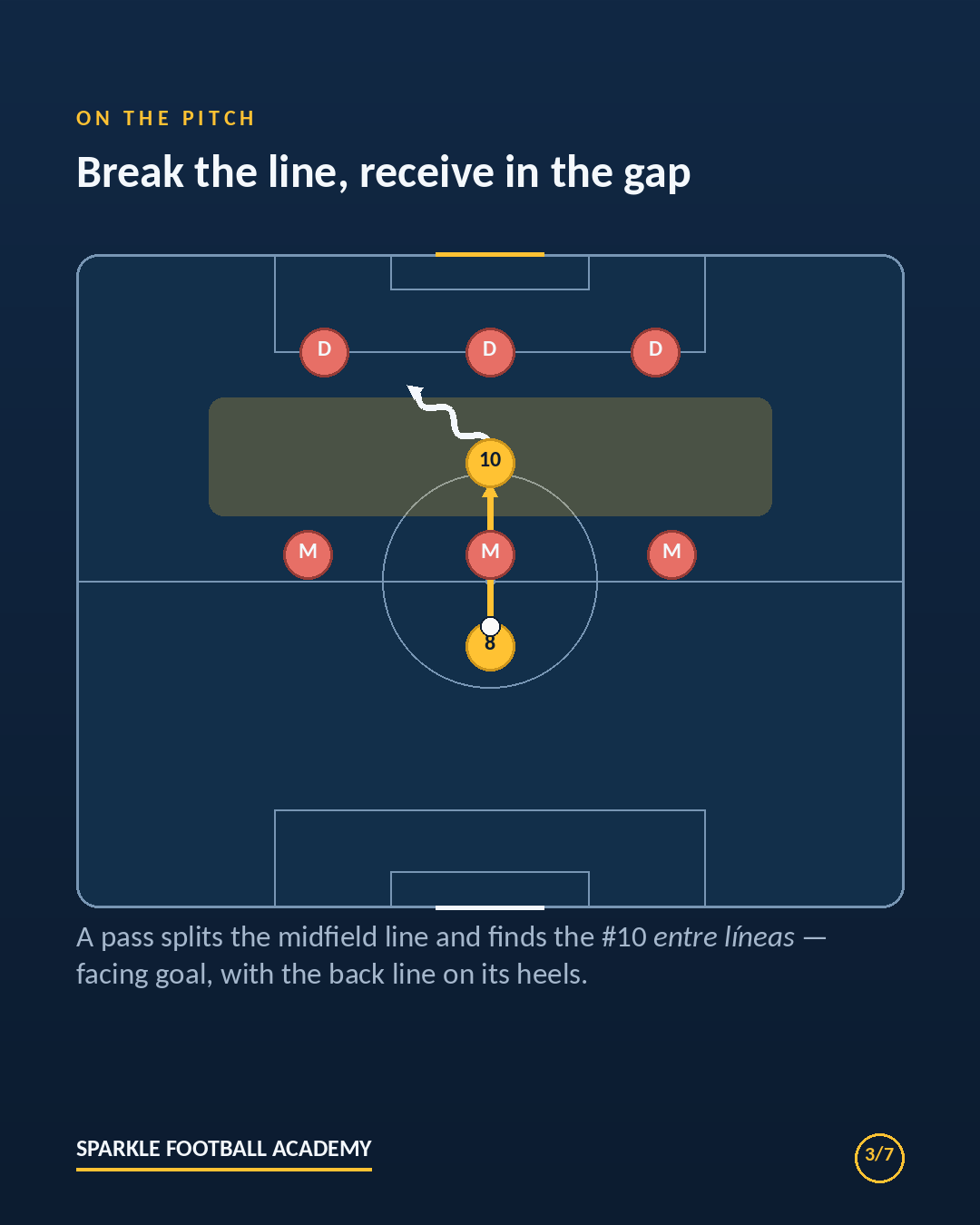
Picture the other team defending in two banks: a line of defenders and, in front of them, a line of midfielders. The strip of grass in the middle — behind their midfield but in front of their defense — is the pocket. A player who receives entre líneas collects the ball in that strip, with the defense ahead of them instead of behind. That one detail changes everything, because now the attacker can see the goal, the runners, and the gaps all at once.
Why playing between the lines breaks defenses
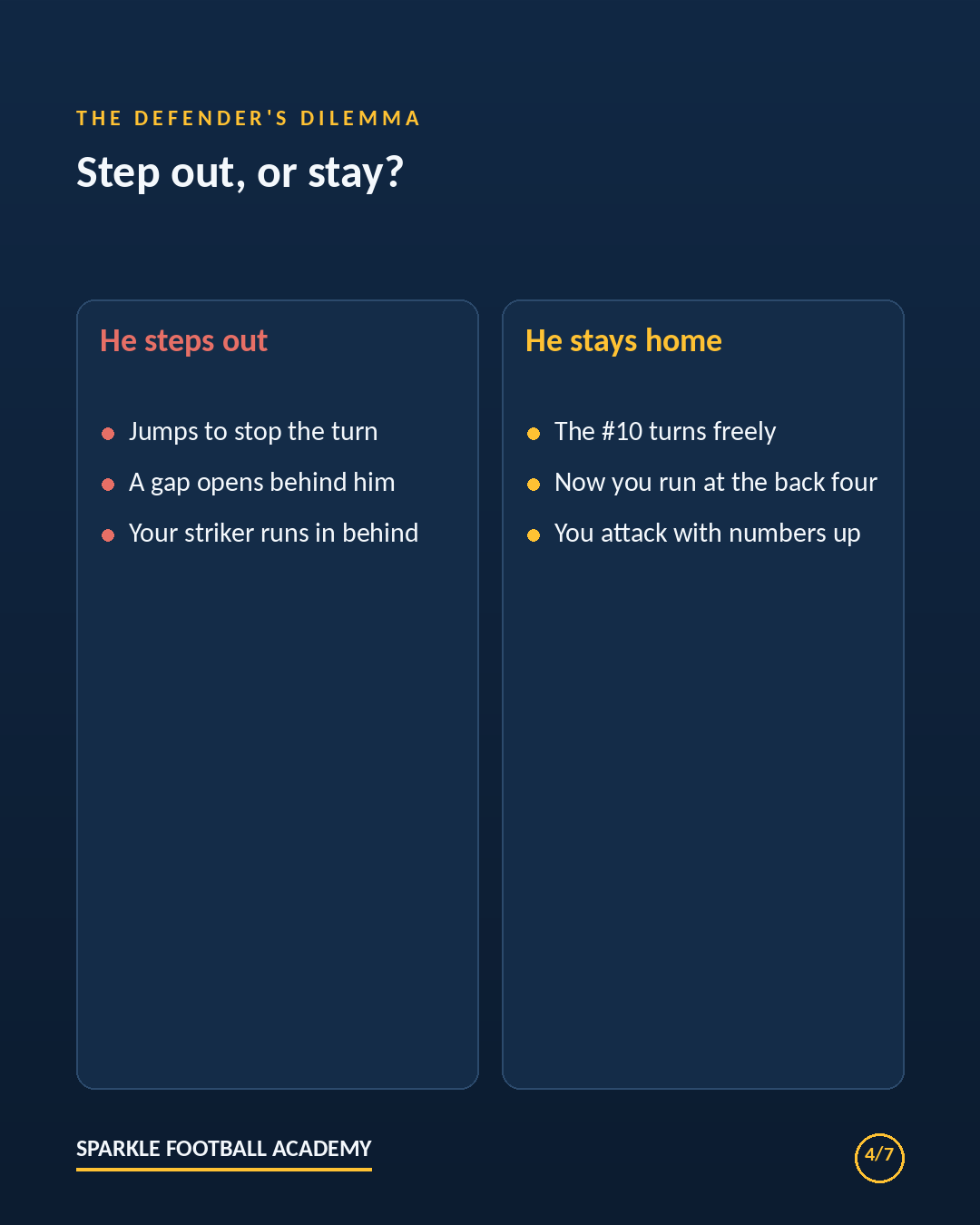
The moment your playmaker settles in the pocket, a defender faces a no-win choice. If a center-back jumps out to stop the turn, he leaves a hole in the back line, and a striker can spin in behind him. If he stays home, your playmaker turns and drives straight at the defense with numbers. There is no clean answer — and forcing opponents into bad choices is the whole point of possession soccer.
That is also why defenders hate it so much. They are trained to stay compact, and a single received pass in the pocket pulls them apart. String two or three of those together and a packed defense starts to crack.
Where the gaps actually appear
Pockets are not random. They show up in predictable places, usually in the half-spaces — the channels between the middle of the field and the wings. Teams that talk about positional play drill these zones on purpose, so players always know where the next pocket should be. When everyone shares that map, finding space between the lines stops being luck and starts being a plan.
- Between their forwards and midfield — where your deep midfielders get time.
- Between their midfield and defense — where your No. 10 and forwards do damage.
- In the half-spaces — the angled lanes that open the cleanest passes to goal.
Three habits that open the pocket
Standing in the gap is not enough; defenders will simply mark you. The good news is that getting free is a set of teachable habits, not a magic trick.
- Check away, then come short. Take two steps away to pull your marker, then dart back into the pocket as the ball travels.
- Receive side-on. Open your body before the ball arrives so your first touch already points forward, not back toward your own goal.
- Scan before you get it. Glance over your shoulder twice so you know your exit before the ball ever reaches your foot.
A simple way to practice it
You do not need fancy equipment to train this. Small, busy games teach it faster than any lecture. A rondo forces players to find space and play out of pressure, and a positional game like the 3v3+3 possession game rewards anyone who receives in the middle zone. Add one rule — a point for every pass received between the lines — and watch how quickly young players start hunting that space on their own.
How it fits your team’s bigger plan
Playing between the lines is not a stand-alone trick; it plugs into everything else good teams do. Once you can receive in the pocket, switching the play becomes deadlier, because you can draw a defense in on one side and swing the ball to the free man on the other. It also explains why coaches love balanced shapes like the 4-3-3: those formations are built to put a player in every pocket at once.
For parents: what to watch and cheer
If you want to help from the sideline, resist the urge to shout “pass it!” the instant your child gets the ball. Players who play between the lines often hold the ball for a heartbeat longer because they are turning and scanning. That pause looks risky but it is exactly the skill we want.
- Praise the check and the turn, not just the goal.
- Cheer when they receive facing forward — that is the hard part.
- Be patient with mistakes; learning to play in tight space means losing the ball sometimes.
Bring it to Sparkle Football Academy
At Sparkle we teach playing between the lines the way kids actually learn it: in small games, with real defenders, where the reward is built into the rules. Players feel when to drop into the pocket and when to spin in behind, instead of memorizing a diagram. If your young player wants to see the field like a playmaker, come try it with us. Book a free trial today and give them the skill every coach is looking for.